Mastering the Midterms: January spend signals a high-stakes cycle
By
Kailee Doherty
Marketing Manager
Published
March 4, 2026
Table of contents
Welcome to Mastering the Midterms, a series dedicated to breaking down the data, trends, and shifts defining the 2026 political advertising landscape.
According to BIA Advisory Services, total local advertising spend is projected to reach $182 billion in 2026. Within this massive landscape, political advertising is a primary driver, forecast to reach $9 billion – heavily concentrated in battleground states and contested districts.
As the 2026 election cycle ignites, Madhive platform data confirms that political advertisers are hitting the ground running. In January alone, we tracked a 42% lift in political CTV impressions compared to the same period in 2024.
This early surge signals a high-stakes environment defined by surgical maneuvering in key territories - proving the race for voter attention is already well underway.
Here is what the January data tells us about the current state of the race.
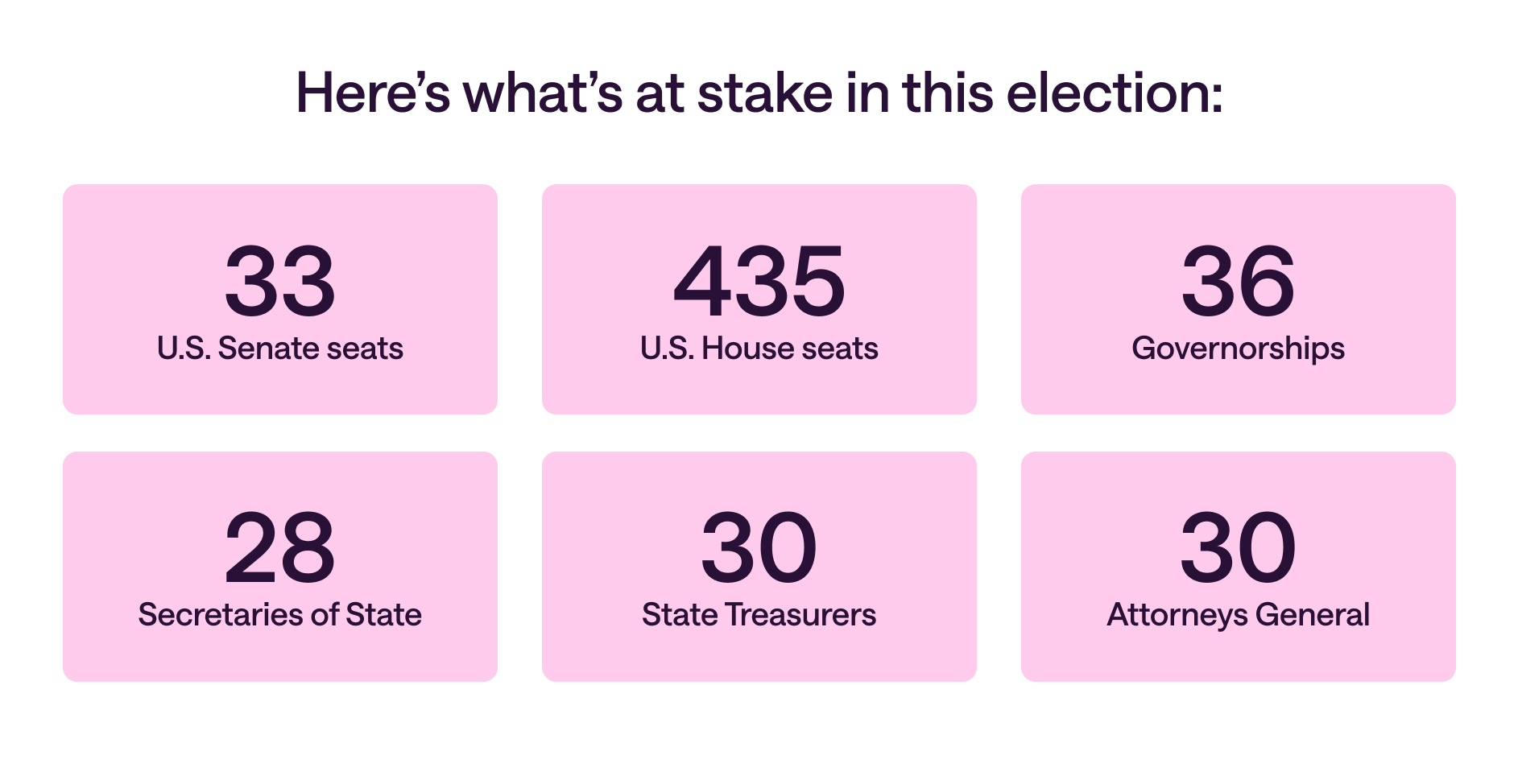
The stakes are high: 500+ offices up for grabs
The 2026 midterms aren’t just about the House and Senate; they represent a pivotal moment for control across all levels of government. With a multitude of critical races on the ballot, campaigns are strategizing early and investing heavily to sway voters.
The lone star focus: Texas dominates early volume
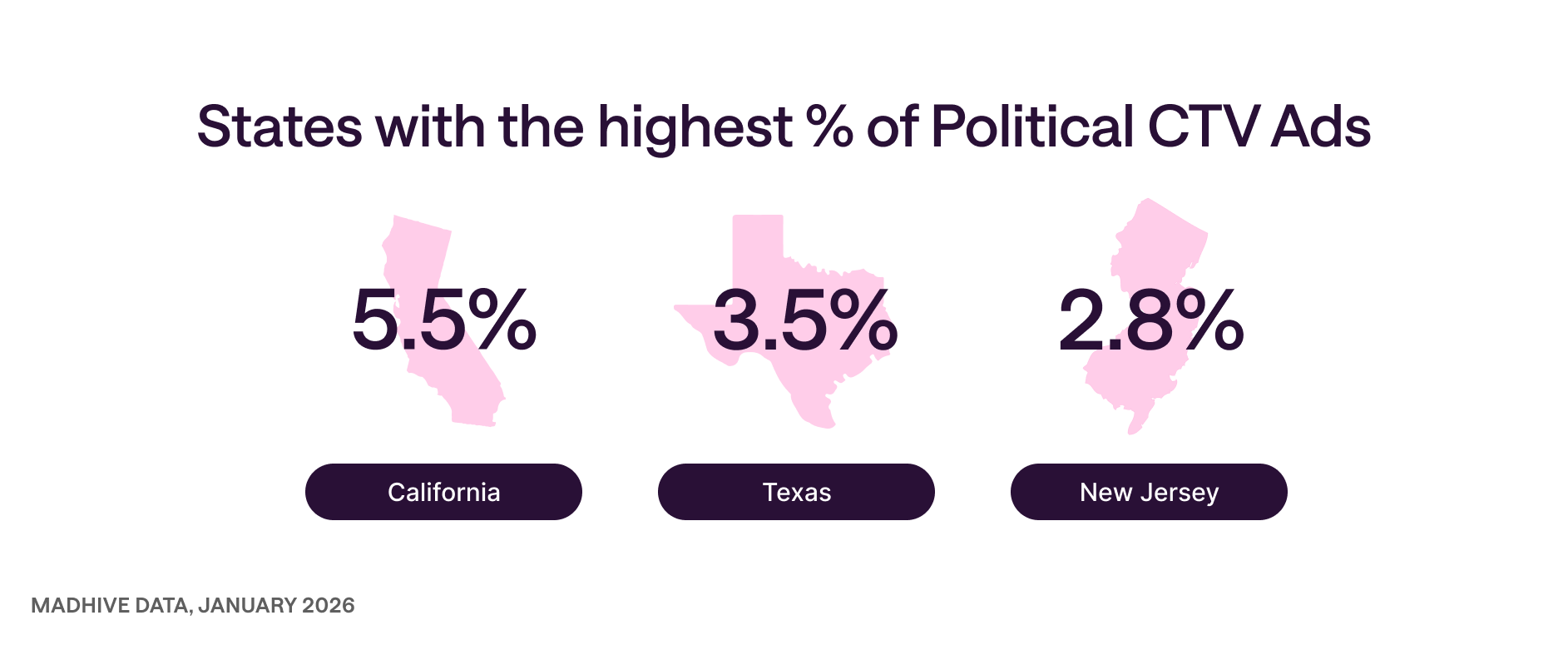
While the 42% lift in impressions points to a nationwide surge, the early 2026 ground game is being fought on a much more regional level. Madhive’s data from January reveals three states are absorbing the bulk of early political CTV spend, with Texas quickly emerging as the epicenter for political ad intensity.
California may have led in the total volume of political ads served, but Texas is where campaigns are competing most aggressively for voter attention. This concentration of spend is largely fueled by a high-stakes U.S. Senate primary, turning the state into a critical early battleground.
Meanwhile, California and New Jersey rounded out the top three, demonstrating a different strategic play. In these states, where crowded fields and expensive media markets like Los Angeles and San Francisco make traditional advertising costly, CTV is proving to be the great equalizer – offering a precise and efficient path for candidates to reach highly specific voter segments.
Key races fueling the early spend
This surge in early ad spend isn’t happening in a vacuum. It’s a direct reflection of several high-profile, competitive races where candidates are fighting for every advantage.
Texas’s Senate showdown: The intense ad volume in Texas is driven by a hotly contested U.S. Senate primary. Incumbent Republican John Cornyn faces fierce primary challenges from Ken Paxton and Wesley Hunt, while Democrats Jasmine Crockett and James Talarico are also fueling the spend in their own competitive primary.
California’s crowded field: With Governor Gavin Newsom term-limited, the race to succeed him is attracting a torrent of ad dollars. The fractured Democratic field includes prominent figures like Katie Porter, Eric Swalwell, and Tom Steyer, while Republicans Steve Hilton and Chad Bianco are also ramping up spend to gain an early foothold.
New Jersey’s battle for Congress: High ad volume is concentrated in a few key House races. A special election in the 11th district, with Analilia Mejia (D) facing Joe Hathaway (R), is drawing national attention. Additionally, the consistently competitive 7th district, held by Republican Tom Kean Jr., remains a key battleground, ensuring high ad spend from both parties.
The strategy behind the stats
The data from January points to key takeaways for political strategists:
Zip-code precision: The concentration of impressions in specific Texas congressional districts proves that advertisers are moving away from broad buys in favor of hyper-local targeting. By focusing on specific zip codes, campaigns are preserving budget for the voters who actually determine the outcome.
CTV is a primary vehicle: A 42% lift in CTV political impressions vs. 2024 confirms that CTV is a cornerstone of the modern political media plan.
The early bird gets the voter: The significant spending in January demonstrates a clear strategy to front-load media buys. Campaigns are moving to build name recognition and lock down valuable inventory long before the traditional fall crunch, aiming to gain an early advantage in a crowded field.
What this means for local advertisers
This early surge in political ad spend isn’t just a signal for political strategists – it’s a critical indicator for local advertisers. As political campaigns pour money into CTV, they are significantly increasing the demand for ad inventory, particularly within key local markets.
For local businesses and media companies, this creates a unique opportunity:
Increased inventory value: The heightened demand from political advertisers can drive up the value of ad impressions, providing a stronger revenue for local publishers and platforms.
Enhanced local targeting capabilities: The precision employed by political campaigns – targeting specific zip codes and congressional districts – highlights the sophisticated local targeting capabilities available. This demonstrates the effectiveness of localized CTV strategies for all advertisers, not just political ones.
Proof of concept for local CTV: The significant investment by political campaigns validates CTV as a powerful and effective medium for reaching local audiences at scale. This serves as a strong case study for local businesses considering CTV for their own advertising efforts, demonstrating its ability to deliver measurable results in geographically defined areas.
By understanding how political dollars are flowing, local advertisers can better anticipate market shifts, optimize their own media strategies, and leverage the technology that political campaigns are already using to win votes – and that can help local businesses win customers.
Looking ahead
As we move into the spring, we expect these numbers to scale significantly. For advertisers, the challenge will be maintaining share of voice as more candidates enter the fray and inventory tightens.



%20(1).jpg)
.png)


