Mastering the Midterms: What the Primaries told us about the importance of local precision in November
By
Kailee Doherty
Marketing Manager
Published
August 31, 2026
Table of contents
Welcome to Mastering the Midterms, a series dedicated to breaking down the data, trends, and shifts defining the 2026 political advertising landscape.
With the primary calendar winding down across major markets, the general election field is officially set. For local advertisers, success in November hinges on avoiding wasted ad spend. As key battleground markets become overcrowded with political campaigns, inventory will tighten and costs will rise. To navigate this competitive landscape effectively, advertisers must adopt hyper-local, precision-targeted strategies that reach consumers at the zip-code level.
Macro scale meets local targeting
Political advertising for the current cycle is projected by AdImpact to reach $10.8 to $11.6 billion, marking a 20% increase over 2022 and making it the most expensive midterm cycle to date. CTV remains the fastest-growing channel within this surge, driven by the broader transition toward omnichannel campaigns.
However, national spend metrics only tell part of the story for local advertisers.
The defining trend of this cycle is hyper-local concentration. Political dollars aren’t spread evenly across the calendar or geographic map. Campaigns are buying earlier, and capital is concentrating in specific congressional districts and zip codes where races remain closely contested.
Why political spend impact hits local advertisers first
Political media buying impacts the entire local advertising ecosystem. When high-stakes campaigns funnel heavy investment into key media markets, the influx of capital tightens inventory and elevates CPMs across broadcast and streaming channels alike.
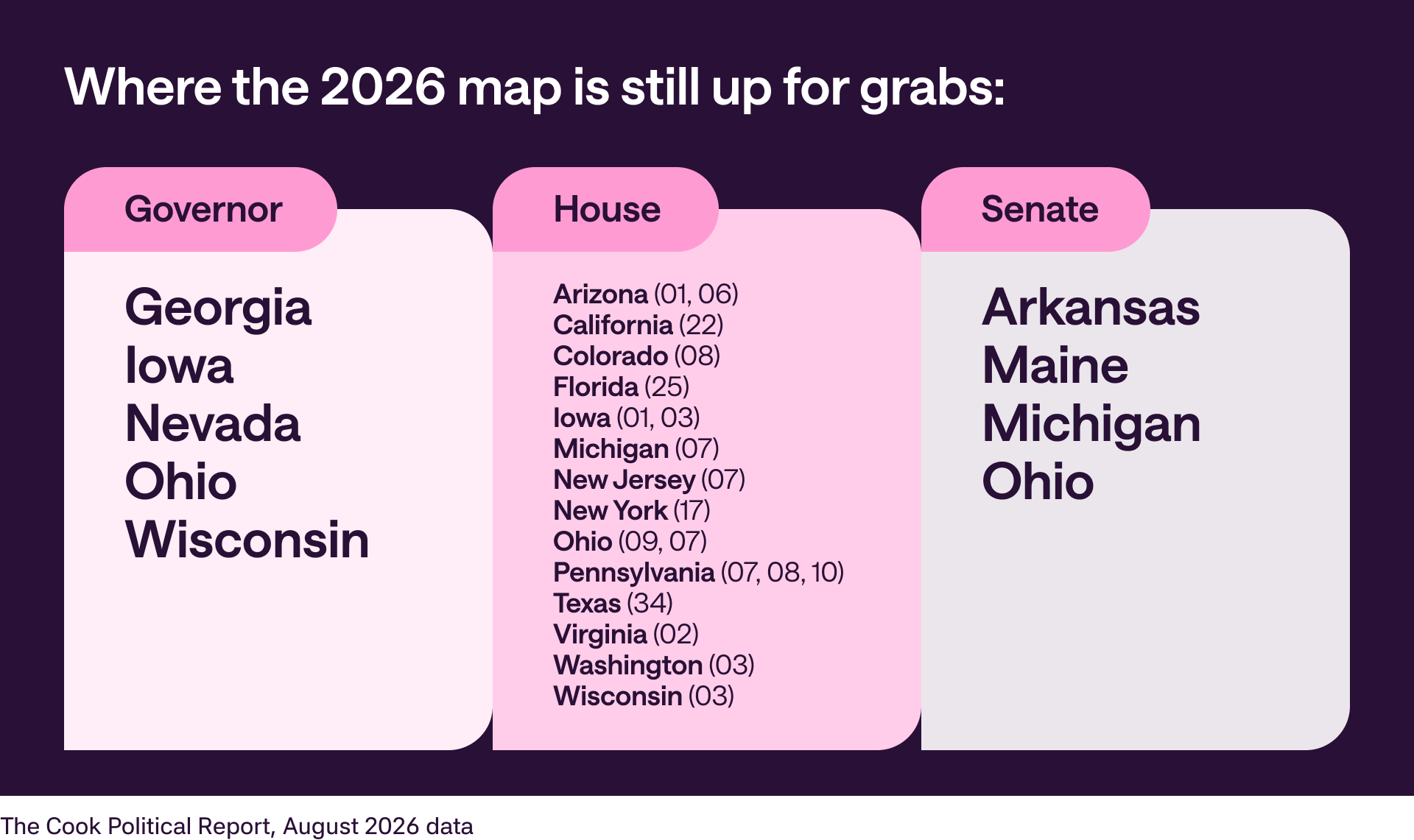
Local businesses and regional brands operating in toss-up districts are competing for the same high-value local inventory as well-funded political campaigns. According to current ratings from the Cook Political Report, competitive pressure will concentrate heavily across specific battlegrounds.
For local advertisers, understanding where these competitive overlaps exist is essential to protecting performance and avoiding getting squeezed during peak buying windows.
Navigating the shift with local precision
When certain congressional districts experience sudden political spend surges, local advertisers stay competitive by leveraging smart, overarching strategies that keep campaigns agile, impactful, and targeted:
Precision beats scale: In high-demand markets, chasing broad reach can quickly lead to wasted budget. Doubling down on hyper-targeted, high-intent audiences ensures every impression reaches the right consumer at the right moment.
CTV combines big-screen impact with digital precision: As traditional broadcast inventory tightens, CTV allows local brands to maintain high-impact visibility in premium streaming environments while retaining granular, data-driven targeting control.
Agility over fixed planning: Political spend creates dynamic, fast-moving market conditions. Maintaining strategic flexibility gives local advertisers the freedom to adjust pacing and pivot resources wherever local opportunity opens up.
Looking ahead for local advertisers
Success for local advertisers requires a local lens. To avoid wasting ad spend in overcrowded battleground markets, advertisers must plan with hyper-local agility, targeting down to the zip-code level, to successfully protect their ROI, cut through the political noise, and reach their target audience this fall.

.png)

%20(1).jpg)