The halo effect: How New York’s first title in 53 years lit up the whole city
By
Kailee Doherty
Marketing Manager
Published
July 20, 2026
Table of contents
Fifty-three years of anticipation erupted into a single, city-shaping night when the Knicks captured the championship. By analyzing precise location signals and media trends, Madhive’s Maverick AI, our enterprise intelligence layer, mapped how this local victory moved New York neighborhood by neighborhood. This is the story of a citywide triumph, told through hyper-local data.
The playoff run awakens a massive wave of new fans
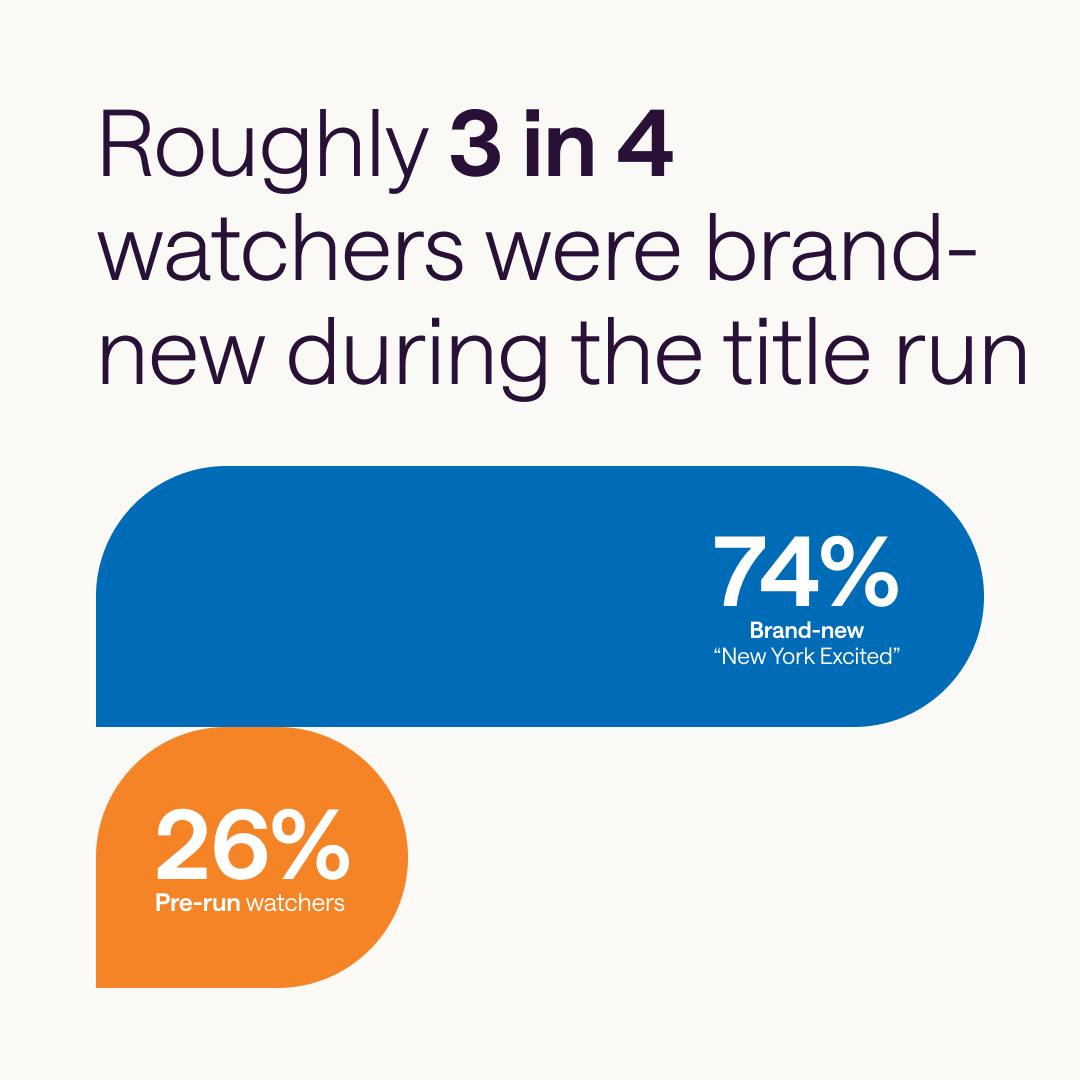
Playoff runs activate a massive, untapped fanbase that regular-season campaigns rarely reach. During this historic run, 819K New York households tuned in. A staggering 74% of this audience consisted of casual or brand-new fans who tuned in specifically for the excitement of the postseason.
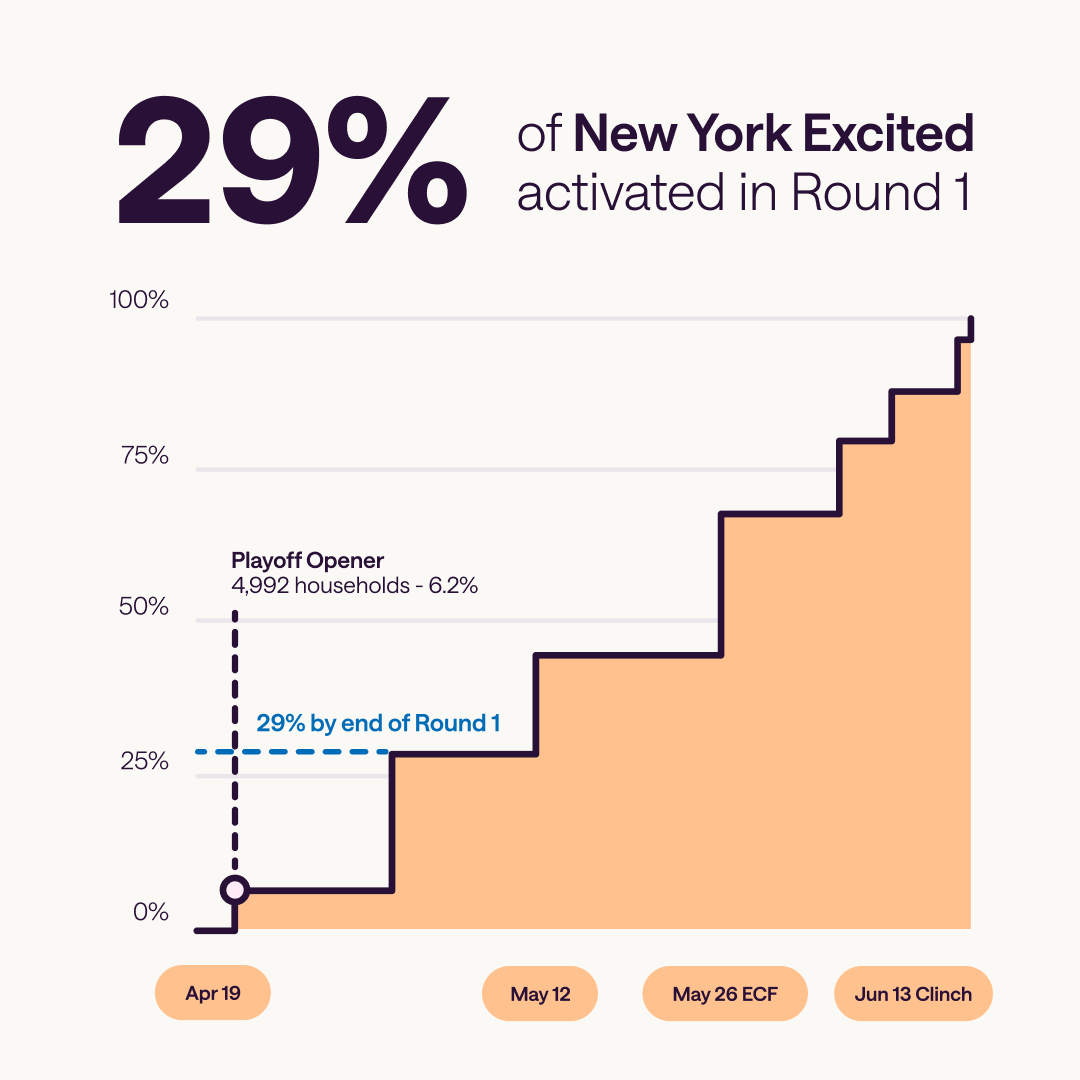
This wave of excitement started early, with nearly a third of these new fans tuning in during the very first round of the playoffs.
Audience activation starts at the very first tip-off. The window of opportunity for local brands opens wide in early spring, long before the championship trophy is lifted.
League devotion looks different than local pride
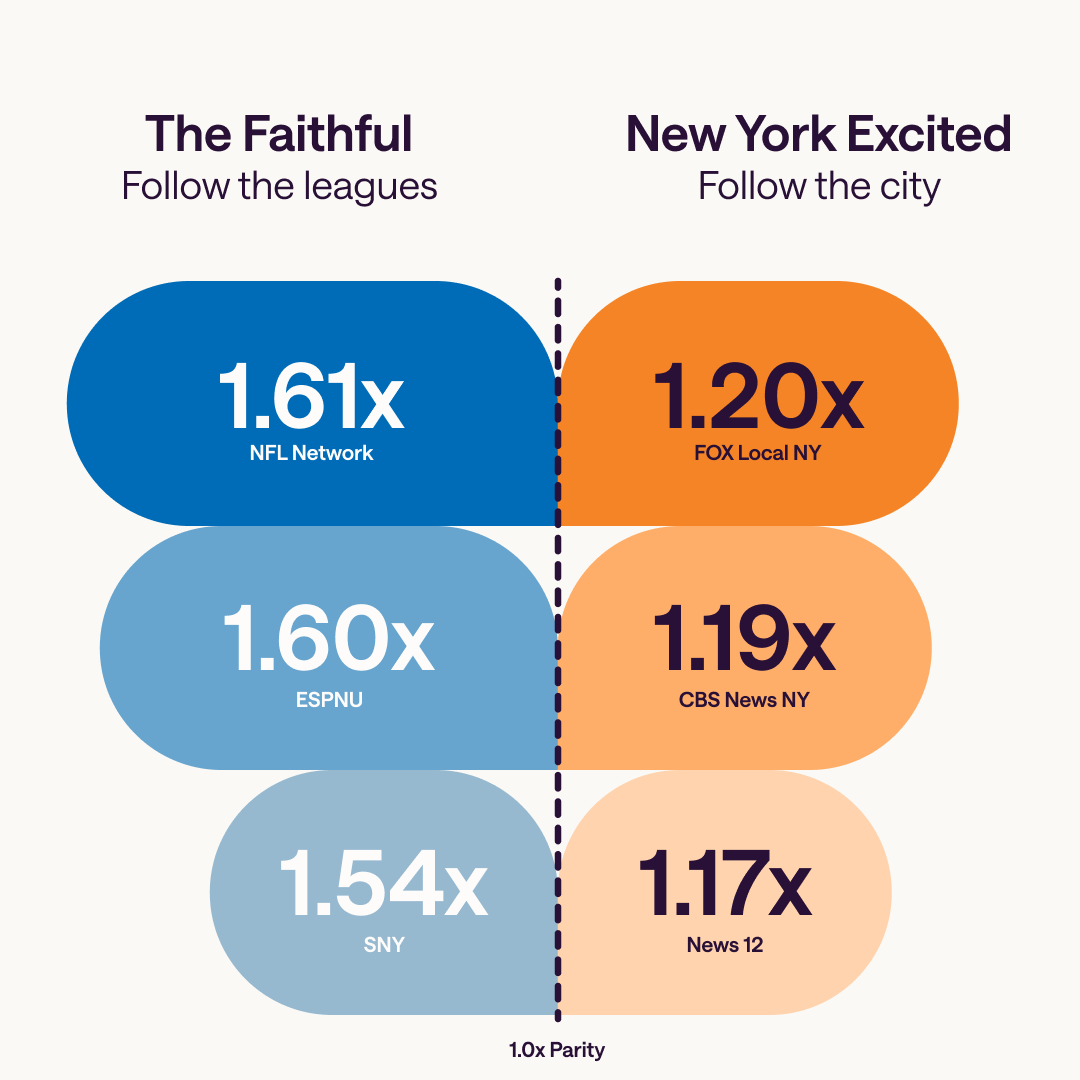
Understanding the media habits of different viewer segments is key to executing successful local campaigns. Traditional sports fans (the Faithful) maintain a steady viewing of national sports networks. In contrast, casual fans who wake up for local excitement (the New York excited) focus their attention on regional news and local broadcasts.
This contrast highlights the power of regional media. National sports buys capture dedicated league followers, while localized regional inventory is the gateway to the massive wave of civic-minded fans.
Home games pull the entire city into local venues
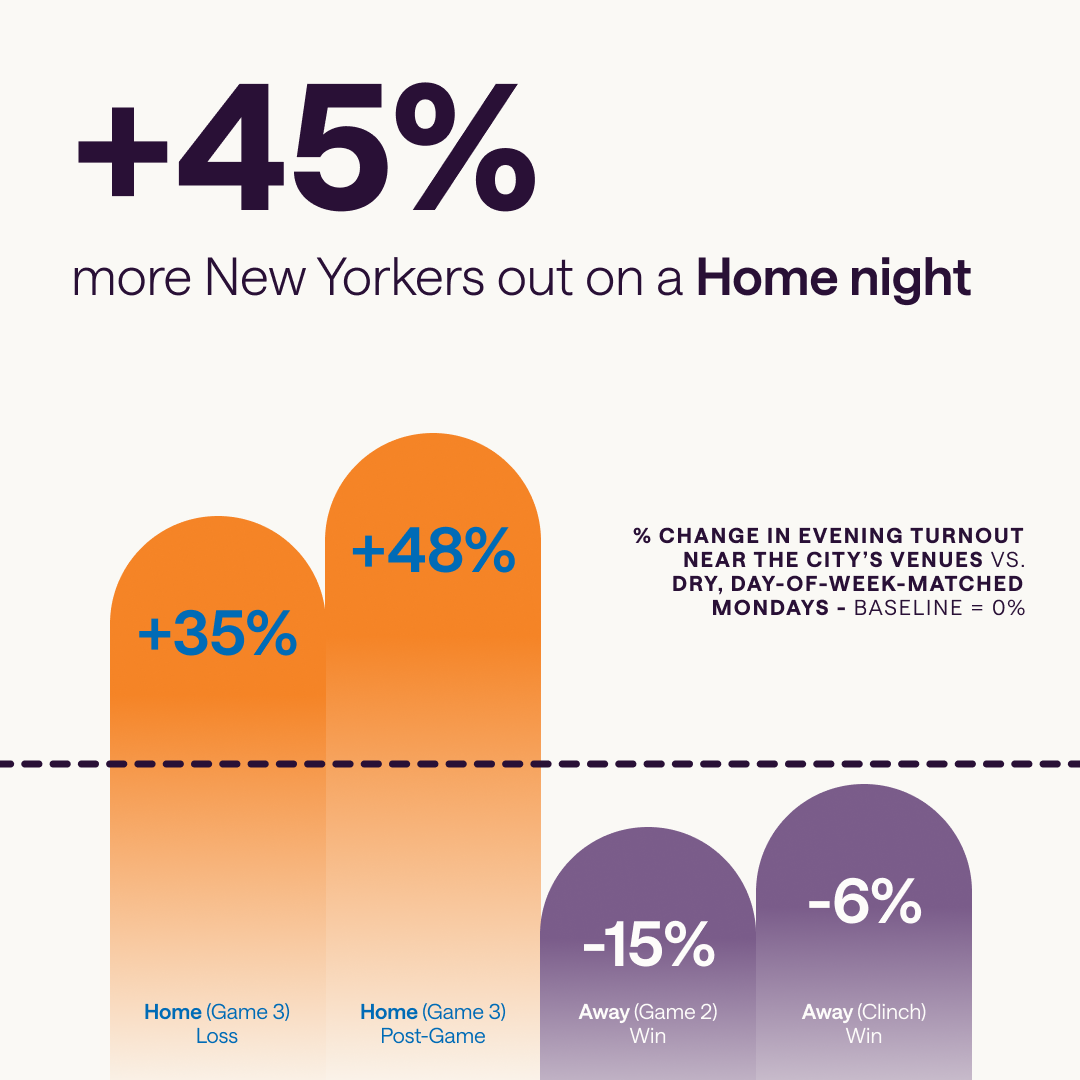
New York’s neighborhood establishments experience a massive surge in energy whenever the team plays on its home court. During Game 3, more than 460K New Yorkers left their homes in small groups to experience the energy together. Foot traffic built steadily hour by hour, reaching its absolute peak at 9:00PM.
This massive wave of togetherness was experienced across the entire metropolitan area. Advertisers targeting regional hubs during home games can capture an incredibly dense, highly active audience.
Physical crowds react to the location of the game
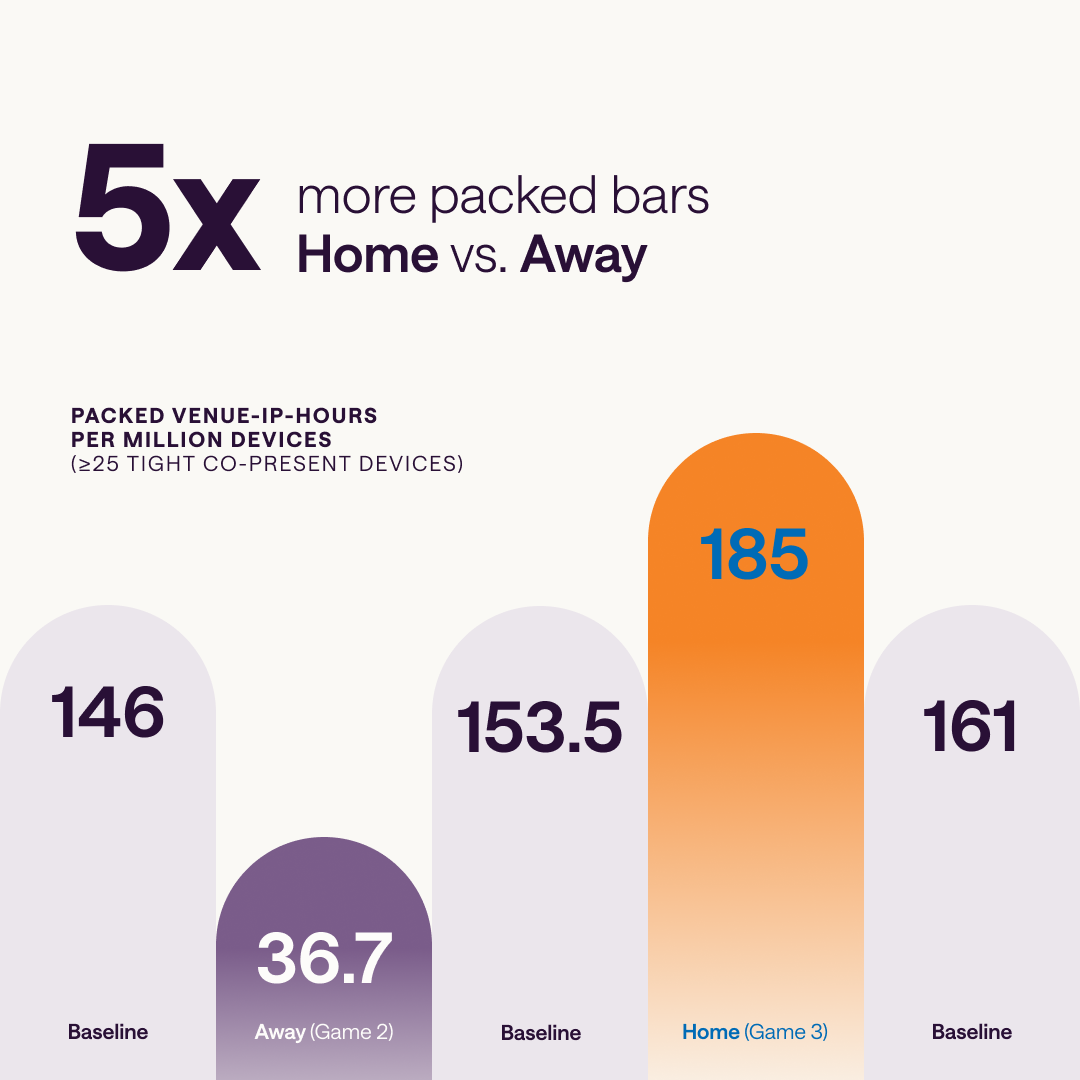
Physical venue attendance is driven by where the game is played rather than what is happening on the scoreboard. Turnout at local venues surges dramatically on home game nights, even when the team suffers a tough loss.
Away games quiet neighborhood venues as fans stay home. This splits the local opportunity: target public venues during home games, and living room screens during away games.
High tension brings local hotspots to life
Focusing on specific city blocks reveals the true gravity of local fan bases. Even during the Game 3 loss, neighborhood venues became dense, collective hubs. For instance, a single Bushwick wine bar saw 2.4x its normal Monday traffic.
These hubs draw passionate crowds from afar. That same night in Flatbush, 5,261 devices filled the block around Midwood Flats, with fans traveling a median of 6.3 miles to get there. This block-level concentration proves local communities will travel significant distances to experience major cultural moments together.
Cultural hubs speak in multiple languages
New York’s diversity is highly apparent along neighborhood blocks like Roosevelt Avenue, where the Jackson Heights and Corona communities engaged with the Knicks championship across different languages and platforms.
This bicultural crowd showed a massive 2.4x over-index on Telemundo and a 19.1x over-index for Cricket on Willow, demonstrating specialized viewing preferences. By aligning creative with these local behaviors, brands can connect deeply with highly engaged audiences.
Cross-river commuters bring the biggest energy
Local passion extends far beyond the five boroughs, with New Jersey representing nearly 29% of the total watch region. During home games, fans commuting from New Jersey showed significantly higher engagement than local residents, with 41.1% of them identified as core Knicks fans – a 42% over-index compared to New Yorkers. Advertisers can capture this highly active audience by targeting local Jersey publications and regional digital networks.
Digital pre-game rituals guide evening venues
Consumer attention transitions fluidly between formats as the day progresses. The same fan reachable on a sportsbook screen at 5PM is the one standing in a watch bar at 9PM.
A fan exposed to betting-related content in the afternoon is 4.8 times more likely to be present at a known Knicks watch bar later that evening. This predictable flow allows brands to build highly coordinated campaigns, sequencing messaging from afternoon mobile to evening screens.
Television screens capture the shared focus of the city
On game nights, New York’s television viewing habits shifted dramatically. While the total volume of TV watched remained flat, the content changed completely. Live sports’ share of viewership surged by 119%, effectively doubling its audience.
This focus on the game came directly at the expense of other programming, as viewers swapped their usual entertainment for live sports, with scripted drama and comedy content dropping by 12-13%.
The championship-winning night draws New York outward and together
The night the Knicks won the title on the road, New Yorkers chose to experience it collectively. Instead of staying home, 1.71 times more people were out across the city than on a normal Saturday, the single highest turnout of the entire playoff run.
This surge in physical presence didn’t scatter to local bars, but instead massed in major public spaces. The block around Times Square saw a 4.8x surge in crowds and the West Village saw a 3.9x lift, turning the city’s largest corridors into centers of celebration.
The strategic power of local precision
A historic sports victory demonstrates how quickly a major cultural event can shift the physical and digital rhythm of an entire city. This behavior shows that the most successful advertising campaigns find success by showing up exactly where the community gathers: on the specific blocks where neighborhoods celebrate, inside the local venues where fans meet, and on the living room screens where households tune in.
Connecting with these moments requires a technology that can listen and adapt just as quickly. That’s why we built Maverick AI – to help local advertisers naturally align their messaging with the shifting, real-world flow of neighborhoods. Learn more here.



.png)
.png)
%20(1).jpg)
.png)


